
EXOSOME THERAPY
The Next Generation of Regenerative Medicine :
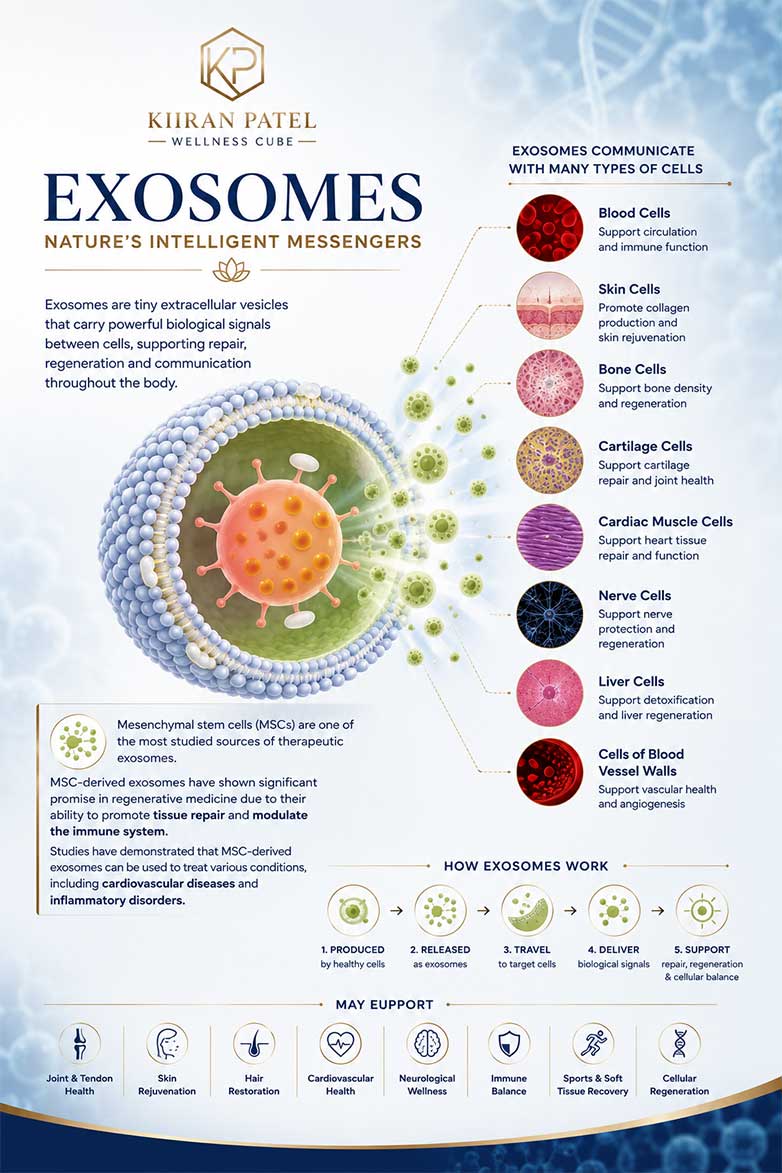
Every cell in the body communicates. One of the most sophisticated ways it does this is through exosomes—tiny extracellular vesicles that carry biological messages between cells.
Measuring just 30–150 nanometres, exosomes contain a rich cargo of naturally occurring proteins, lipids, growth factors, messenger RNA (mRNA) and microRNA (miRNA). Rather than replacing damaged tissue, they help coordinate the body’s own repair processes by influencing cellular communication, modulating inflammation and supporting tissue regeneration.
Often described as the body’s “biological messengers,” exosomes have become one of the fastest-growing areas of regenerative medicine due to their ability to harness the body’s innate healing potential.
How Exosomes Work :
Healing is not simply about replacing damaged cells—it is about restoring communication between them.
Exosomes deliver highly specialised molecular signals that help surrounding cells respond more efficiently to injury and physiological stress. Through this complex cellular communication network, exosomes may support.
Cellular repair and regeneration.
Healthy inflammatory balance.
Collagen and extracellular matrix production.
Formation of new blood vessels (angiogenesis).
Tissue recovery after injury.
Cellular resilience and recovery.
Unlike stem cells, exosomes are cell-free biological vesicles. They do not replicate or become new tissue themselves; instead, they provide the molecular signals that help guide the body’s own regenerative processes.
Why Exosomes Are Generating Global Interest :
Exosomes represent a significant evolution in regenerative medicine.
Because they are naturally involved in cellular communication, researchers are exploring how they may help support healing across multiple organ systems while avoiding many of the challenges associated with live cell therapies.
Potential advantages include :
Cell-free regenerative technology.
Low immunogenicity.
Rich source of regenerative signalling molecules.
Ability to communicate with multiple cell types.
Potential future applications in targeted biological therapies.
Simplified storage and handling compared with living cell therapies.
Areas of Active Clinical Research :
Exosome-based therapies are currently being investigated across a broad range of medical disciplines, including :
Orthopaedics and sports medicine.
Joint and tendon injuries.
Osteoarthritis.
Hair restoration.
Skin rejuvenation.
Wound healing.
Neurology.
Cardiovascular medicine.
Autoimmune and inflammatory disorders.
Tissue regeneration.
A Rapidly Advancing Field :
Regenerative medicine is evolving at an extraordinary pace. As of January 2025, 292 exosome (extracellular vesicle)-related clinical studies had been registered on ClinicalTrials.gov, spanning inflammatory diseases, musculoskeletal medicine, neurology, dermatology, cardiovascular health, pulmonary medicine and oncology. This expanding body of research reflects the growing scientific interest in exosome-based therapies and their potential role in the future of precision and regenerative medicine.
Our Philosophy :
At Kiiran Patel Wellness Cube, we believe regenerative medicine is most effective when integrated into a comprehensive, personalised health strategy.
Exosome therapy is never viewed as a standalone treatment. Where appropriate, it may be combined with advanced diagnostics, nutritional optimisation, hormone balancing, peptide therapy, IV nutritional medicine, red light therapy and targeted lifestyle interventions to support your body’s natural capacity for repair and recovery.
Every treatment plan is individualised, evidence-informed and designed around your unique biology, goals and long-term health.